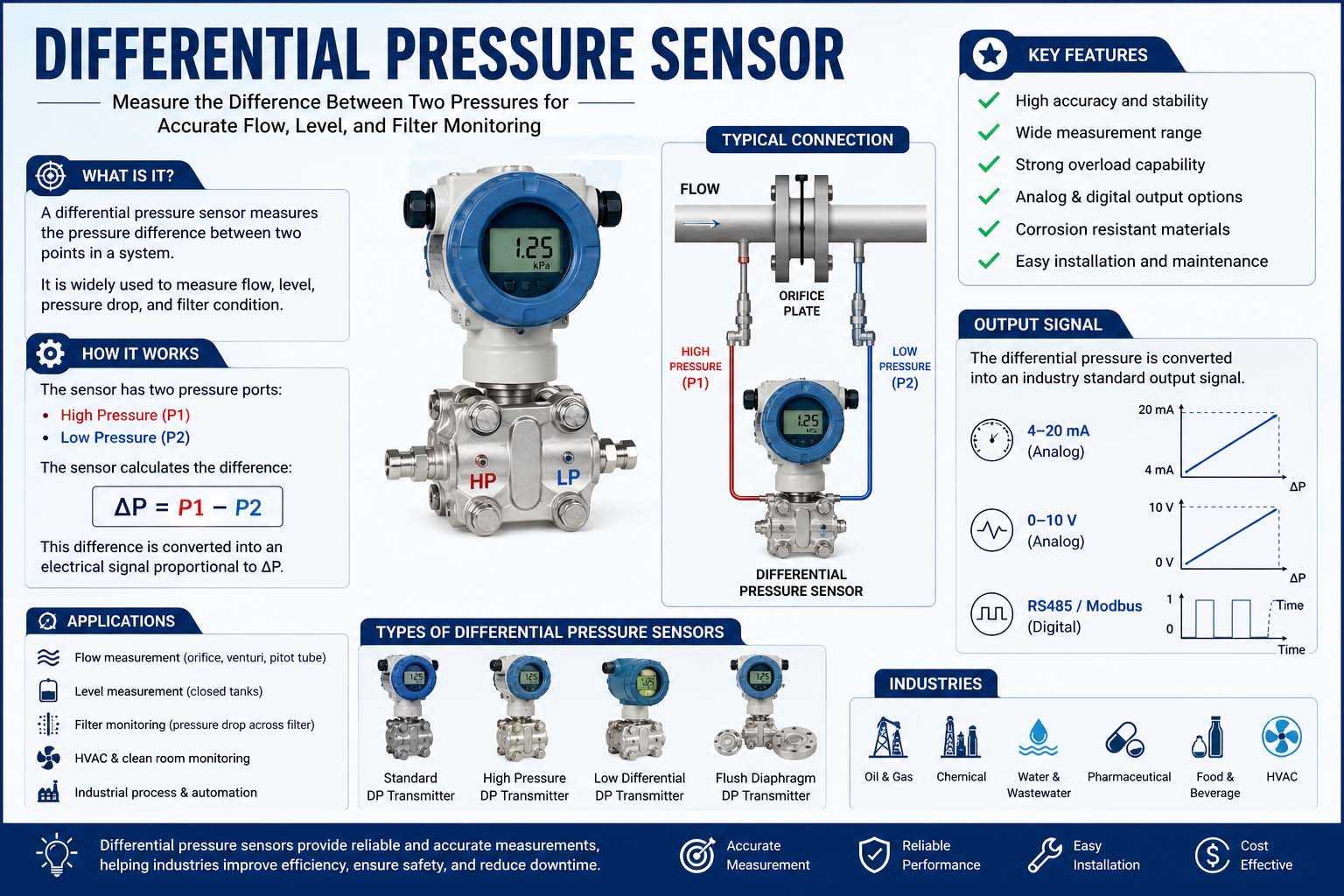
A differential pressure sensor is an important device used in many industries to measure the difference in pressure between two points within a system. It helps monitor airflow, liquid flow, filter performance, tank levels, and many other processes. These sensors are commonly found in HVAC systems, manufacturing plants, laboratories, automotive systems, and medical equipment.
As industries continue to rely on automation and precise monitoring, the demand for reliable pressure measurement tools keeps growing. A plays a vital role in ensuring safety, efficiency, and system performance. Understanding how it works and where it is used can help businesses and individuals make smarter equipment decisions.
What Is a Differential Pressure Sensor?
A differential pressure sensor is a device designed to detect and measure the difference between two separate pressure sources. Instead of measuring pressure relative to the atmosphere, it compares pressure from two points and provides an output signal based on the difference.
For example, if one side of the sensor measures 10 PSI and the other side measures 7 PSI, the s 3 PSI. This data can be used to identify blockages, leaks, fluid movement, or system efficiency.
These sensors are available in analog and digital models, depending on the application requirements.
How a Differential Pressure Sensor Works
The operation of a differential pressure sensor is based on pressure acting on a sensing element such as a diaphragm. The diaphragm flexes according to the pressure difference between the two input ports. This movement is then converted into an electrical signal that can be displayed, monitored, or transmitted to a control system.
Modern sensors often use advanced technologies such as piezoresistive, capacitive, or strain gauge elements for highly accurate readings. The signal output may be voltage, current, or digital communication protocols depending on the design.
This allows operators to monitor pressure changes in real time and respond quickly when conditions move outside normal ranges.
Common Applications of Differential Pressure Sensor
A is used in many industries because of its versatility and accuracy. In HVAC systems, it monitors air filters and airflow through ducts. When pressure drops across a filter increase, it indicates the filter may need replacement.
In industrial processing plants, these sensors help measure liquid levels in sealed tanks. By comparing top and bottom pressure values, the fluid level can be accurately determined.
In water treatment facilities, they monitor pump performance and pipeline flow conditions. In clean rooms and laboratories, they help maintain pressure balance between rooms to prevent contamination.
Automotive applications also use differential pressure sensor technology in exhaust systems and engine management systems.
Benefits of Using a Differential Pressure Sensor
One major benefit of a is improved system efficiency. By continuously measuring pressure differences, operators can detect clogged filters, blocked pipes, or pump issues before major failures occur.
Another benefit is energy savings. HVAC and industrial systems run more efficiently when airflow and fluid movement are properly controlled.
Accuracy is another advantage. These sensors provide precise readings that help maintain quality standards in manufacturing and processing environments.
They also improve safety by alerting operators to pressure imbalances that may indicate leaks, restricted flow, or dangerous operating conditions.
Types of Differential Pressure Sensor
There are several types of differential pressure sensor models available. Low-pressure sensors are commonly used in HVAC and room pressure monitoring systems. High-pressure versions are used in industrial hydraulic and gas applications.
Wet/wet sensors are designed for liquid measurement where both sides may contact fluids. Dry/dry sensors are used mainly for gases and air systems.
Digital smart sensors offer advanced diagnostics, remote monitoring, and programmable outputs. Analog sensors are simpler and often more cost-effective for basic systems.
Choosing the correct type depends on pressure range, media compatibility, environmental conditions, and required accuracy.
How to Choose the Right Differential Pressure Sensor
When selecting a , the first factor to consider is pressure range. The sensor must handle the expected minimum and maximum pressure differences without damage or loss of accuracy.
Material compatibility is also critical. If measuring corrosive gases or liquids, choose materials resistant to chemical damage.
Accuracy requirements should match the process needs. Highly sensitive applications such as laboratories may need more precise models than general industrial systems.
Environmental conditions such as temperature, humidity, vibration, and dust exposure should also be considered. Some sensors are designed specifically for harsh environments.
Lastly, check output type compatibility with your control panel, PLC, or automation system.
Maintenance Tips for Differential Pressure Sensor
Regular maintenance helps extend the life of a . Inspect tubing and connections for leaks, cracks, or blockages. Dirty lines can create false readings.
Calibration should be performed according to manufacturer recommendations to ensure continued accuracy. In dusty environments, filters and ports should be cleaned regularly.
Always protect the sensor from overpressure conditions that exceed rated limits. Installing proper pressure protection devices can prevent damage.
Routine inspection and testing can help avoid downtime and costly repairs.
Why Differential Pressure Sensors Matter Today
Modern systems depend on real-time monitoring and efficient operation. A differential pressure sensor supports both goals by providing accurate pressure difference data for air, gas, and liquid systems.
From reducing energy waste in commercial buildings to maintaining precision in industrial production, these sensors have become essential tools. As automation continues to expand, the importance of differential pressure sensor technology will only grow.
Final Thoughts
A differential pressure sensor is a smart investment for anyone needing accurate pressure comparison between two points. Whether used in HVAC systems, manufacturing plants, clean rooms, or fluid systems, it helps improve efficiency, safety, and reliability.
Choosing the right model and maintaining it properly ensures long-term performance. With growing demand for smart monitoring solutions, the differential pressure sensor remains one of the most valuable sensing devices available today.