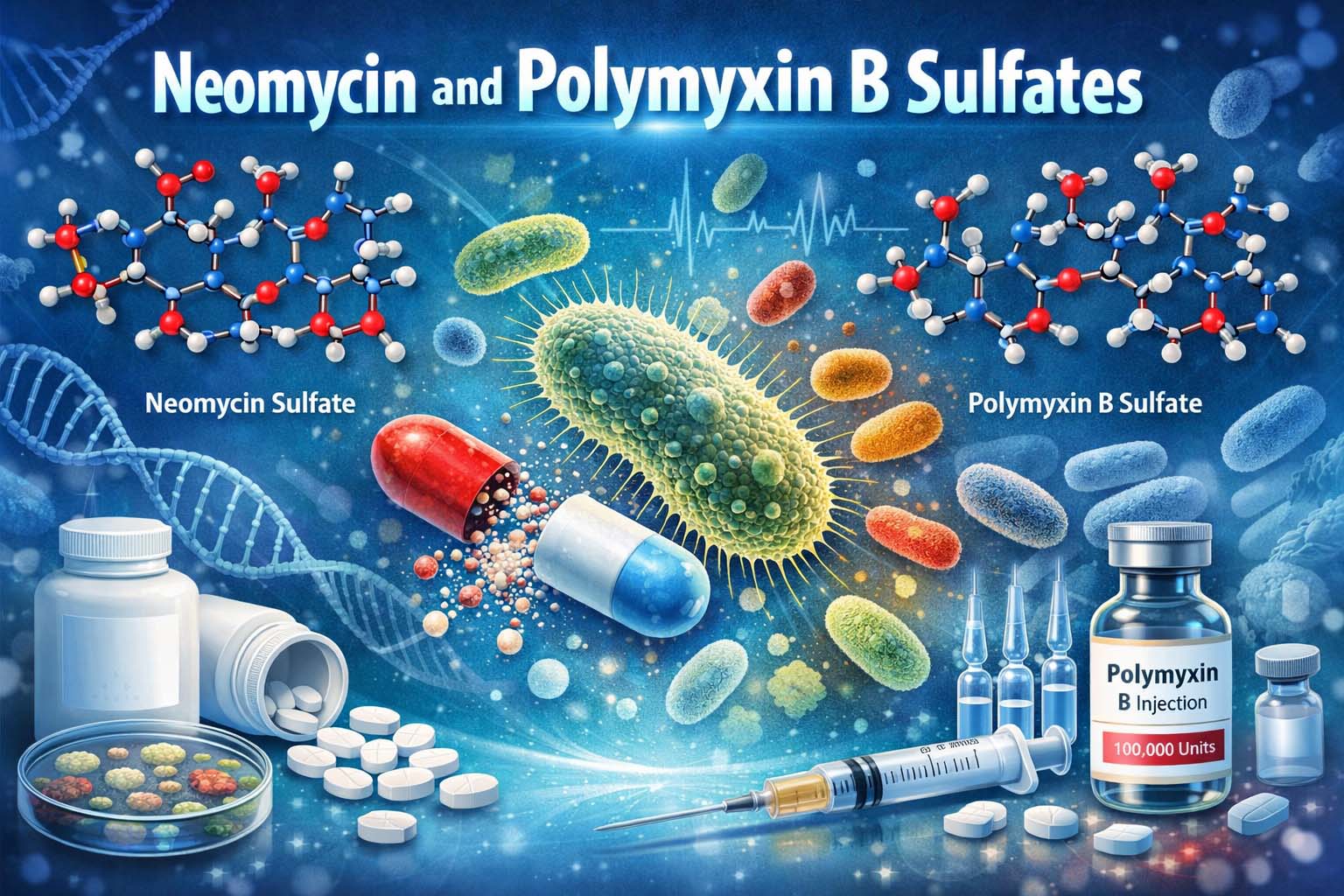
Neomycin and polymyxin b sulfates are antibiotics commonly used in medicine to help treat bacterial infections. These medications are often found in topical creams, ointments, eye drops, ear drops, and combination antibiotic products. They work by stopping the growth of bacteria and helping the body recover from infections.
Because bacterial infections can affect the skin, ears, and eyes, healthcare providers often prescribe antibiotic combinations for better coverage. One well-known combination includes neomycin and polymyxin b sulfates, sometimes paired with other ingredients such as hydrocortisone or bacitracin depending on the product.
In this guide, we explain what neomycin and polymyxin b sulfates are, how they work, common uses, possible side effects, and important precautions.
What Are Neomycin and Polymyxin B Sulfates?
Neomycin and polymyxin B are two different antibiotics.
- Neomycin belongs to the aminoglycoside antibiotic family. It helps kill bacteria by interfering with bacterial protein production.
- Polymyxin B targets bacterial cell membranes, causing bacteria to break down and die.
When combined, these antibiotics may treat a broader range of bacteria than one antibiotic alone.
The term sulfates refers to the salt form used in medication formulas to improve stability and effectiveness.
Common Uses of Neomycin and Polymyxin B Sulfates
Healthcare professionals may recommend these antibiotics for several bacterial conditions.
1. Skin Infections
Topical ointments containing these antibiotics may be used for:
- Minor cuts
- Scrapes
- Burns
- Small skin infections
2. Eye Infections
Certain prescription eye drops may help treat bacterial eye issues such as:
- Conjunctivitis
- Eyelid infections
- Eye irritation caused by bacteria
3. Ear Infections
Some ear drop formulas containing these antibiotics are prescribed for outer ear infections.
4. Preventing Infection
Doctors may recommend use after minor procedures or injuries to lower infection risk.
How Do These Antibiotics Work?
The combination works in two different ways:
- Neomycin blocks bacteria from making proteins needed for survival.
- Polymyxin B damages the outer protective membrane of bacteria.
This dual action makes it harder for bacteria to survive and multiply.
Available Forms
Neomycin and polymyxin b sulfates can come in several forms depending on treatment needs:
- Topical cream
- Antibiotic ointment
- Eye drops
- Ear drops
- Combination prescription medications
Always use the exact product type recommended by a healthcare professional.
How to Use Properly
Correct use is important for successful treatment.
- Clean the affected area.
- Apply a thin layer.
- Wash hands after use.
For Eye Drops:
- Wash hands first.
- Avoid touching the dropper tip.
- Use the prescribed number of drops.
- Keep the bottle clean.
For Ear Drops:
- Tilt head as instructed.
- Apply the correct dose.
- Stay in position briefly.
Never use longer than directed unless advised by your doctor.
Possible Side Effects
Like all medications, these antibiotics may cause side effects in some people.
Common Mild Side Effects:
- Skin irritation
- Redness
- Mild itching
- Temporary burning sensation
- Mild stinging after application
Serious Reactions (Need Medical Help):
- Severe rash
- Swelling
- Trouble breathing
- Worsening irritation
- Hearing changes (certain ear products)
- Vision problems (eye products)
symptoms occur.
Important Precautions
Before using neomycin and polymyxin b sulfates, consider these precautions.
Allergy Risk
Some people may be allergic to neomycin.
Use Only as Directed
too long. Overuse may irritate skin or contribute to resistance.
Avoid Viral or Fungal Infections
Antibiotics treat bacteria, not viruses or fungal conditions.
Pregnancy and Breastfeeding
Consult a healthcare provider
Children
Use only when approved for the child’s age and condition.
Can You Buy It Over the Counter?
Some topical antibiotic ointments containing neomycin and polymyxin B may be available without prescription in certain countries. Eye and ear formulas usually require a prescription.
Availability depends on local regulations.
When to See a Doctor
Seek medical care if:
- Symptoms do not improve
- Infection spreads
- Pain becomes severe
- Fever develops
- Eye symptoms worsen
- Ear drainage continues
- Skin reaction appears after use
Persistent infections may require a different treatment.
Storage Tips
To maintain medication quality:
- Store at room temperature unless instructed otherwise
- Keep tightly closed
- Avoid heat and moisture
- Keep away from children
- Do not use expired medication
Eye and ear products may have shorter use periods after opening.
Frequently Asked Questions
Is Neomycin and Polymyxin B Good for Cuts?
It may help prevent minor skin infections when used properly.
Can It Treat Pink Eye?
Certain prescription eye drop versions may treat bacterial pink eye if prescribed by a doctor.
Can I Use It Every Day?
healthcare provider.
Is It Safe for Everyone?
Not always. special precautions.
Why SEO Searches for This Medication Are Common
Many people search neomycin and polymyxin b sulfates when they receive a prescription or read the ingredient label on an ointment. They often want to know:
- What it treats
- Whether it is safe
- How to use it
- Possible side effects
- Prescription vs non-prescription options
Understanding the medication can improve proper use and safety.
Conclusion
Neomycin and polymyxin b sulfates are antibiotic ingredients used in creams, ointments, eye drops, and ear drops to treat bacterial infections. By combining two antibiotics, these medications help fight bacteria effectively in several parts of the body.
While often useful, they should be used correctly and only as directed. Mild irritation can occur, and some people may have allergies ,seek medical advice promptly.
Always follow healthcare guidance when using neomycin and polymyxin b sulfates to ensure safe and effective treatment.